
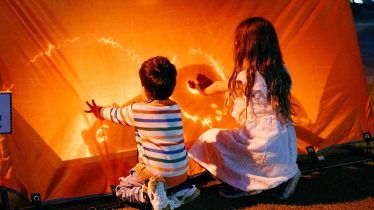
What happens when very young children are invited not just to watch films, but to play with the language of cinema? From 26 November 2026, Prague’s NaFilM National Film Museum answers with LET’S PLAY FILM!, an interactive exhibition for children aged 4-8.
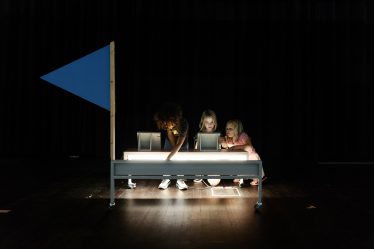
Developed in collaboration with Dutch creative studio Taartrovers, the exhibition transforms part of the museum into a playful laboratory of light, shadow, sound and movement. After watching a selection of short Czech animated films, children are invited to explore the basic ingredients of cinema through hands-on installations. They can experiment with images, create their own film stories, bring pictures to life… or even go camping with a bear! The idea is to turn young visitors from passive spectators into active creators, discovering the possibilities of moving images through play.
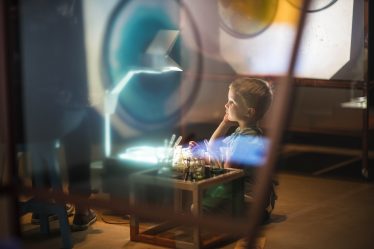 Playfulness has always been at the heart of all Taartrovers’ work, so they were the ideal partner for this project. “Today’s children are growing up surrounded by screens, in the role of viewers, but they rarely encounter film as an art form that they can create and experience for themselves. That is why we wanted to create a space at the museum where even the youngest viewers can become creators, making full use of their childlike imagination and their ability to play and experiment,” says Adéla Mrázová, founder of the NaFilM museum.
While children can explore visual arts and science in museums from an early age, film as a creative medium is still rarely part of their cultural experiences. Taartrovers brings valuable insights to the project, having previously developed playful film encounters for young audiences in collaboration with European institutions in Frankfurt (German Film Museum) and Amsterdam (EYE Filmmuseum). New installations by other visual artists further enrich the Prague exhibition.
Founded in 2015, NaFilM has explored innovative ways to introduce film to children and adults alike. LET’S PLAY FILM! is conceived as a travelling exhibition and will also offer special programmes for nursery schools and primary school pupils, at a time when film education is gaining a more prominent place in school curricula.